AS CALIFORNIA
To Auckland
24h delay threshold
- On time92%
- Delayed5%
- Cancelled3%
$2,927 volDeparts Tue, Sep 8, 12:03 PM UTC
Every ETA is a prediction. Price the ones that won't hold, settled from the port's own record.
 AucklandNZAKL8% disrupted$13,571 tradedRonnie Macdonald from Chelmsford, United Kingdom · CC BY 2.0
 Hong KongHKHKGToo early to callBaycrest · CC BY-SA 2.5
 BunburyAUBUY47% disrupted$7,201 tradedCalistemon · CC BY-SA 4.0
 ParanaguaBRPNG33% disrupted$7,488 tradedCLAITON LUIS MORAES · CC BY-SA 4.0
 VeneziaITVCE20% disrupted$26,795 tradedMarc Ryckaert · CC BY-SA 4.0
24h delay threshold
24h delay threshold
24h delay threshold
24h delay threshold
24h delay threshold
24h delay threshold
24h delay threshold
24h delay threshold
24h delay threshold
24h delay threshold
24h delay threshold
24h delay threshold

24h delay threshold
24h delay threshold
24h delay threshold
24h delay threshold
24h delay threshold
24h delay threshold
24h delay threshold
24h delay threshold
24h delay threshold
24h delay threshold
24h delay threshold
24h delay threshold
24h delay threshold
24h delay threshold
24h delay threshold
24h delay threshold
24h delay threshold
24h delay threshold
24h delay threshold
24h delay threshold
24h delay threshold
24h delay threshold
24h delay threshold
No trades yet
24h delay threshold
24h delay threshold
24h delay threshold
24h delay threshold
24h delay threshold
24h delay threshold
24h delay threshold
24h delay threshold
24h delay threshold
24h delay threshold
24h delay threshold
24h delay threshold
24h delay threshold
24h delay threshold
24h delay threshold
No trades yet
Narrow the list with a filter to reach the rest — this view holds the first 50 of 852.
An arrival estimate is a forecast, and the market prices whether it holds. One market asks whether a single ship makes port on time; the next asks how many clear the Suez, Panama or Hormuz over a week — moved by a queue at anchor, a drought-hit lock, a closure nobody has priced yet. Every market fixes its terms when it opens and settles from the official arrival and throughput records. Trading carries zero fees.
Pick a voyage and trade whether it reaches port on time, or open a maritime chokepoint — the Suez Canal, the Strait of Hormuz — and trade how much traffic clears it over a window. Voyage markets open ahead of the estimated arrival and close when it is due. A queue at a canal, congestion at the destination port, a diversion around trouble — each moves the price for days. When throughput falls, the delay runs down the supply chain into stockouts, idled factories and higher freight costs.
The price is the chance the market gives an outcome. An "on time arrival" share at 70¢ means a 70% chance the vessel reaches port inside the window, and it pays $1 if it does. Because voyages run for days and can queue for a canal transit or divert around trouble, these prices swing more than a flight's or a train's.
Ships settle on the official maritime and port record — the vessel's recorded arrival, or the measured throughput at the chokepoint — against the value fixed when the market opened. Settlement is automatic and nobody here decides it.
A container ship bound for Rotterdam via Suez opens at "on time" 65%. Congestion builds at the canal and tracking shows the vessel anchored in the waiting queue; "on time" slides to 30%. It arrives two days behind its locked ETA — the on-time contract settles $0 and the delayed side is paid.
 ParanaguaCLAITON LUIS MORAES · CC BY-SA 4.0
 AucklandRonnie Macdonald from Chelmsford, United Kingdom · CC BY 2.0
 Le HavreAlexandre Prevot from Nancy, France · CC BY-SA 2.0
 PiraeusApaleutos25 (Giorgos Voudouris) · CC BY-SA 4.0
 Goteborg
 TrondheimTrondheim Havn from Trondheim, Norway · CC BY-SA 2.0
 Gent (Ghent)LimoWreck · CC BY-SA 3.0
 Splitdronepicr · CC BY 2.0
 DubrovnikInkey · CC BY-SA 3.0
 HvarCarsten Steger · CC BY-SA 4.0
 StockholmTuomas Vitikainen · CC BY-SA 4.0
 Rotterdam
 Rhodesdronepicr · CC BY 2.0
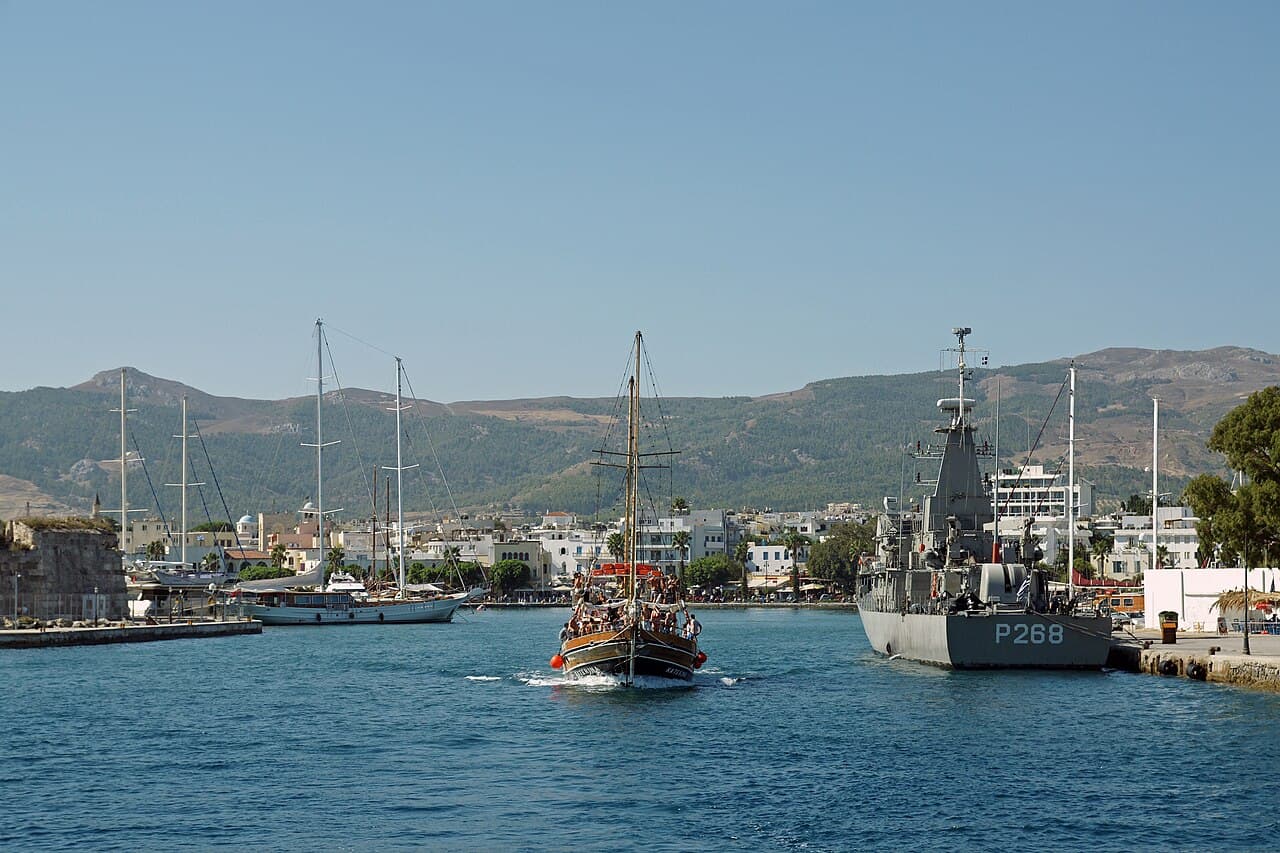
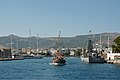 Koskallerna · CC BY-SA 3.0
 AlbanyJoe “velojo” A · CC BY-SA 3.0
Freight forwarders lose thousands to demurrage when vessels queue at port. Transport event contracts hedge congestion risk in USDT, settled automatically.
Force majeure excuses carriers — your losses remain. Vessel delay event contracts on Gaduin settle by oracle in USDT, no legal dispute required.
D&D fees can surge without warning. Learn how freight traders use event contracts—not insurance—to hedge demurrage and detention exposure on Gaduin.
Strait of Hormuz disruptions remake global shipping. See how vessel delay event contracts on Gaduin help hedge Gulf cargo delays — settled in USDT.
A container lashing inspection delay can hold departure after loading. Learn how checks, rework and clearance affect sailing and delivery ETAs.
How cruise port call delay contracts work on Gaduin: what the cruise line refunds, where travel insurance stops, and the signals that move a price.
Trading event contracts carries risk: you can lose the full amount you put in. Nothing on GADUIN is investment advice.